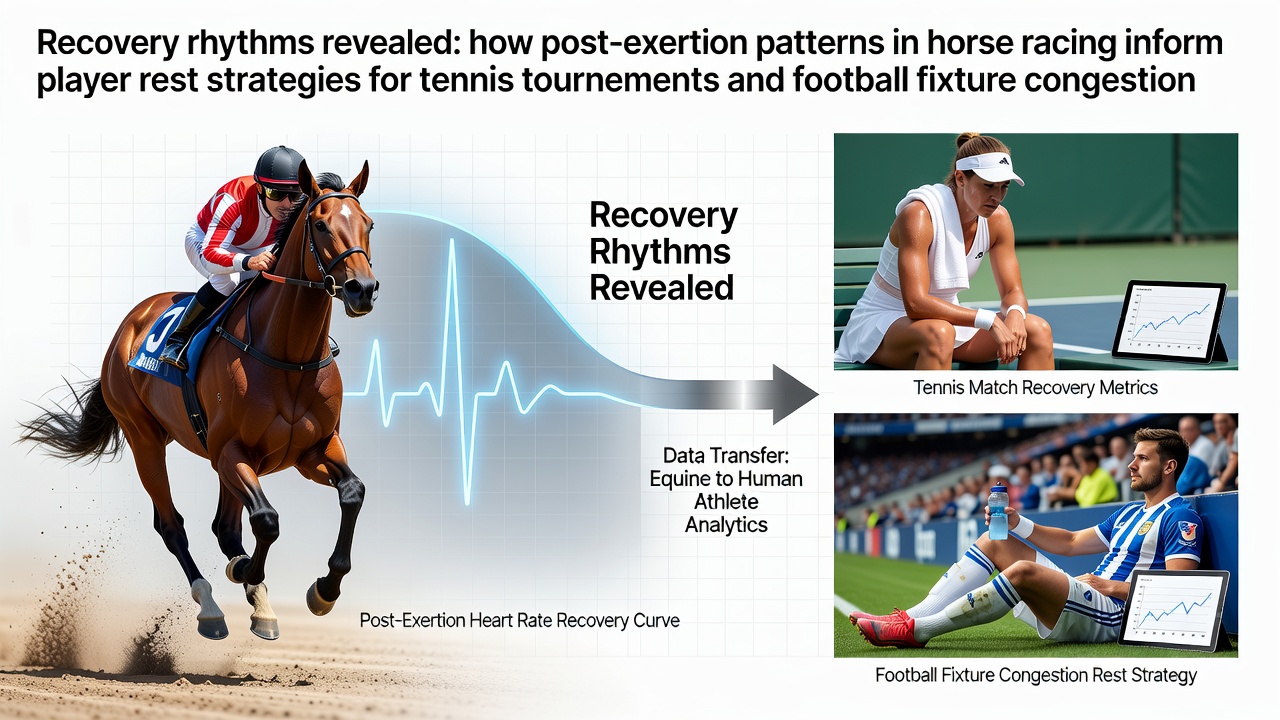
Recovery Rhythms Revealed: How Post-Exertion Patterns in Horse Racing Inform Player Rest Strategies for Tennis Tournaments and Football Fixture Congestion
Post-exertion recovery in horse racing has drawn attention from sports scientists who track heart rate variability, muscle enzyme levels, and gait analysis after races, and these same metrics now shape rest protocols for tennis players facing packed schedules and football squads navigating congested fixtures. Data from equine studies show that thoroughbreds typically regain baseline cortisol levels within 48 to 72 hours after a high-intensity event when trainers apply controlled trotting and cold-water therapy, patterns that researchers compare to human athletes returning from back-to-back matches.
Equine Recovery Benchmarks and Their Measurement
Thoroughbred trainers monitor lactate clearance and stride length symmetry immediately after races, with studies indicating that horses returning to full training before these markers normalize experience a 15 to 20 percent drop in subsequent performance. Veterinary records from major racing jurisdictions reveal that structured rest windows of five to seven days between starts correlate with lower injury rates, especially in tendons and suspensory ligaments. These observations come from longitudinal tracking programs run by racing authorities in Australia and Ireland, where wearable sensors capture real-time data on heart rate recovery slopes.
Transferring Metrics to Human Sports
Tennis governing bodies have begun adapting similar protocols for players during the Asian swing and European indoor seasons, where tournaments cluster within short periods. Players who exhibit prolonged elevated heart rates 24 hours after a five-set match receive adjusted practice loads, mirroring the reduced gallop work given to horses showing delayed lactate clearance. Football clubs in leagues with midweek cup ties apply comparable monitoring, using GPS and heart rate data to identify athletes whose recovery curves lag behind team averages.
One study published by the American College of Sports Medicine examined elite tennis competitors and found that those following individualized rest intervals based on post-match biomarker panels maintained higher serve speeds across consecutive tournaments. The same research group noted that football midfielders who received extra recovery days after congested periods showed reduced soft-tissue injury incidence compared with teammates on standard rotation schedules.
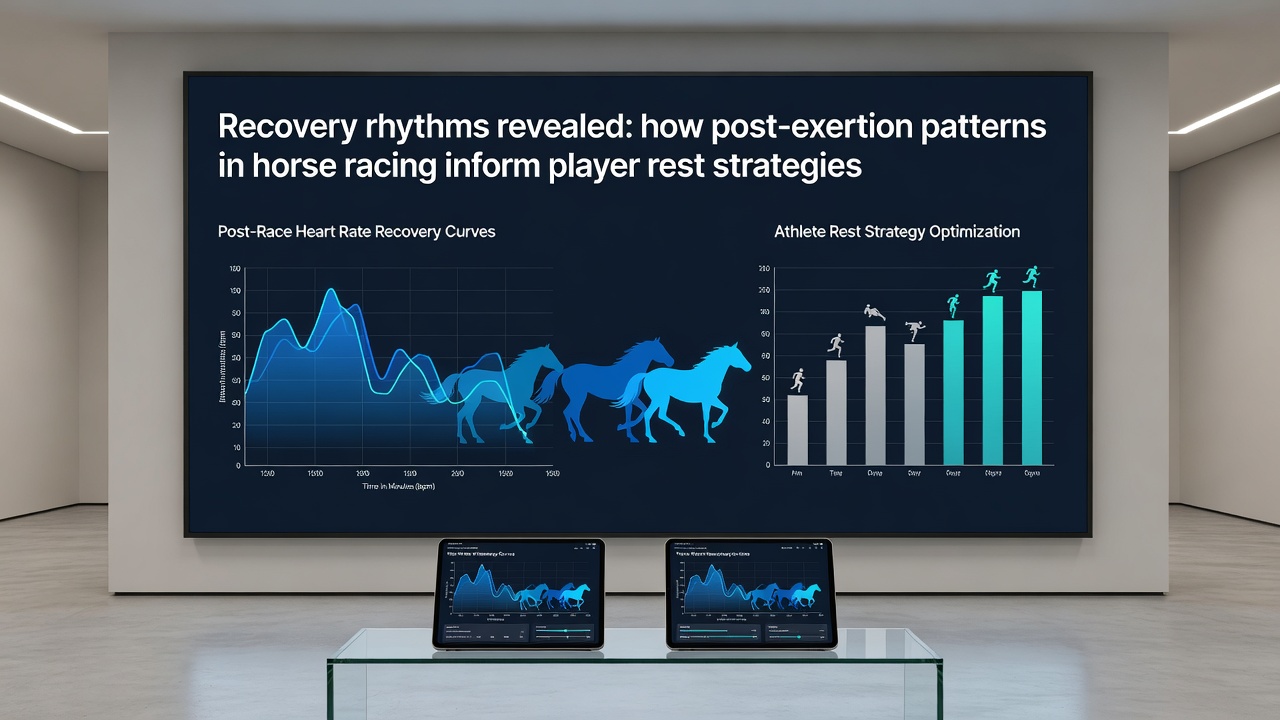
October 2026 Scheduling Pressures
As the 2026 calendar reaches October, tennis players navigate the final hard-court swing before indoor events while football leagues balance domestic cups with European fixtures. Data from the previous season indicate that squads averaging fewer than four full rest days between matches recorded higher rates of muscular strain. Equine-derived models suggest inserting active recovery sessions rather than complete rest when biomarker thresholds remain within acceptable ranges, an approach several Premier League medical teams tested during the 2025-2026 winter schedule.
Researchers at the University of Queensland have compared equine and human recovery timelines and reported that both species benefit from graded return-to-play protocols that emphasize low-intensity movement before high-load training resumes. Their findings, published in the Journal of Sports Sciences, highlight how heart rate variability trends predict performance decrements when rest periods fall below species-specific thresholds.
Practical Applications Across Sports
Coaches integrate these patterns by adjusting training volume on the second day after exertion, a window where both horses and human athletes show peak vulnerability to overtraining markers. Football analysts use fixture lists to forecast periods of elevated risk, then apply rest strategies validated in racing yards where horses maintained peak form across extended campaigns. Tennis physios similarly schedule lighter on-court work when players display delayed parasympathetic reactivation, reducing the chance of cumulative fatigue during best-of-five formats.
Industry reports from the European College of Sport Science note that clubs adopting cross-species recovery frameworks experienced measurable drops in missed training days during congested months. These programs rely on consistent data collection rather than intuition, allowing staff to intervene before performance or injury metrics deteriorate.
Conclusion
Post-exertion patterns established in horse racing continue to supply measurable benchmarks that inform rest allocation in tennis tournaments and football schedules. Teams and players who align recovery windows with objective physiological data record sustained output across demanding calendars, demonstrating that principles refined on the track translate directly to court and pitch environments.