Decoding Coastal Wind Patterns' Influence on Endurance Metrics for Strategic Multi-Sport Selections
Coastal wind patterns shape endurance performance across cycling, running, and swimming segments in multi-sport competitions, and researchers track these variables through sustained meteorological observations combined with athlete telemetry. Data from coastal monitoring stations reveal that wind speeds averaging 15 to 25 kilometers per hour frequently alter pacing strategies and energy expenditure during events staged near shorelines.
Wind Direction and Its Direct Effects on Athlete Output
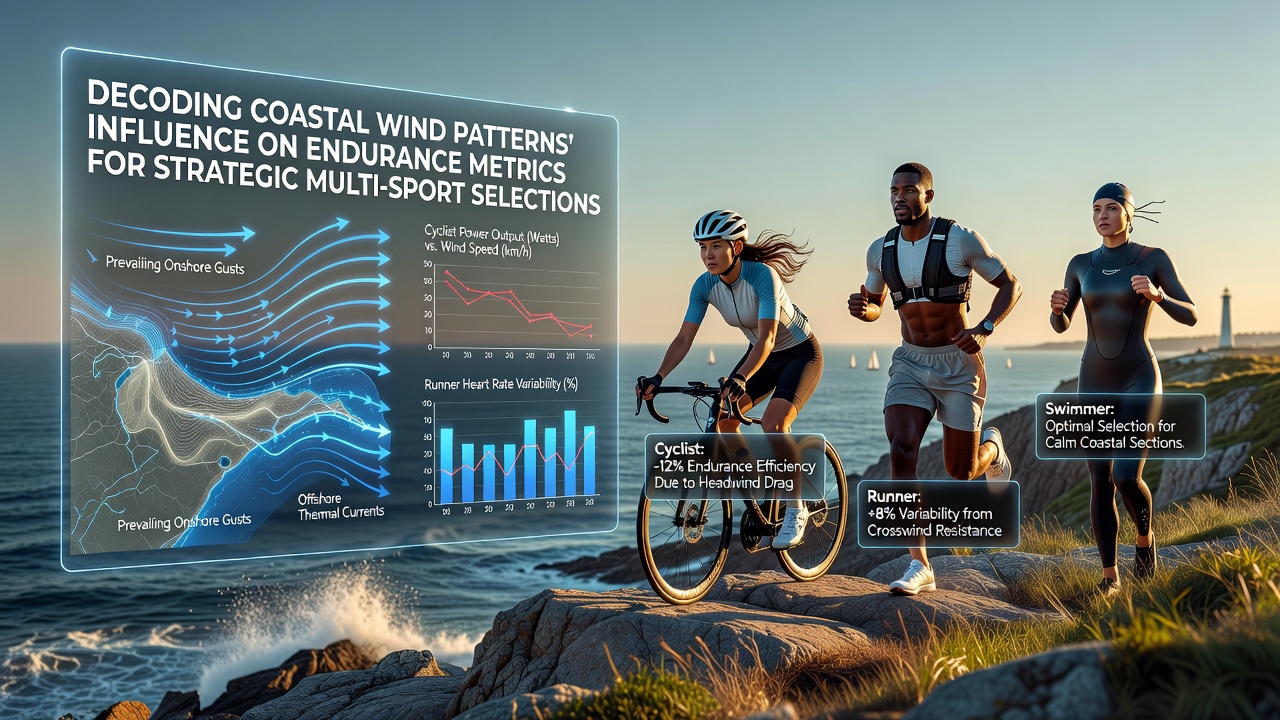
Headwinds increase aerodynamic drag and force competitors to expend additional oxygen to maintain target velocities, whereas tailwinds reduce resistance and allow lower heart rates for equivalent distances. Crosswinds introduce lateral forces that demand constant micro-adjustments in body position, particularly on exposed coastal roads and beach paths where gusts shift rapidly. Studies conducted by sports science teams at universities in Australia and the United States show that sustained crosswinds above 20 kilometers per hour elevate core temperature and perceived exertion even when overall speed remains constant.
Seasonal Patterns and August 2026 Event Planning
August typically brings stable high-pressure systems along many temperate coastlines, yet localized sea breezes develop each afternoon as land temperatures rise. Organizers of multi-sport festivals scheduled for August 2026 have already incorporated historical wind rose diagrams into course designs, placing aid stations and transition zones to minimize exposure during peak gust periods. Athletes preparing for these events review archived data sets from the European Centre for Medium-Range Weather Forecasts to anticipate daily wind shifts that begin around midday and intensify until sunset.
Endurance Metrics Measured Under Variable Wind Conditions
Researchers record metrics such as power output in watts, running economy expressed as milliliters of oxygen per kilogram per kilometer, and stroke efficiency in open-water swims. When wind velocity increases by 10 kilometers per hour, average power requirements on flat coastal terrain rise between 8 and 12 percent according to field tests performed on instrumented bicycles. Swimmers encounter additional resistance from wind-driven surface chop that disrupts breathing patterns and reduces propulsive efficiency, while runners on compacted sand experience compounded effects from both wind and surface compliance.
Strategic Selection of Events and Training Venues
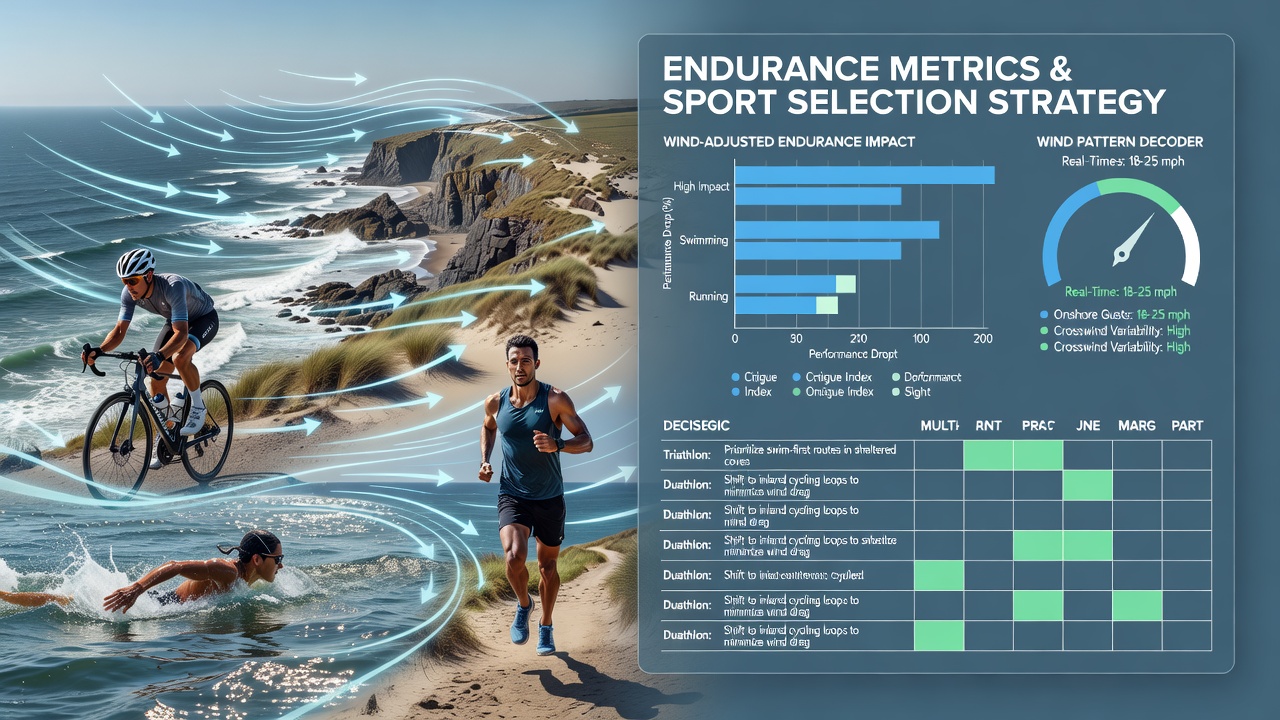
Coaches analyze long-term wind climatology when recommending specific races to athletes whose physiological profiles favor either steady power or high-cadence responses. Events held on leeward sides of peninsulas often present more predictable conditions, allowing consistent pacing, whereas windward courses introduce variability that rewards adaptability. Training camps situated along the Pacific Northwest or the Mediterranean coasts expose athletes to repeated wind exposure, enabling measurable improvements in tolerance measured through repeated time-trial protocols conducted under controlled gust conditions.
Integration of Real-Time Data into Competition Decisions
Modern multi-sport selections incorporate live feeds from coastal anemometers that transmit updates every five minutes during race windows. Teams adjust start times for individual segments or modify equipment choices such as deeper-section wheels when forecasts indicate sustained winds exceeding 30 kilometers per hour. Data from the Australian Bureau of Meteorology demonstrates that accurate incorporation of these feeds correlates with reduced variance in split times across large fields of competitors.
Physiological Adaptations Observed in Coastal Training Environments
Longitudinal monitoring of athletes who regularly train in windy coastal zones shows elevated mitochondrial density and improved capillary recruitment in leg muscles compared with matched groups training inland. These adaptations emerge after eight to twelve weeks of consistent exposure and translate into measurable advantages when athletes later compete in similarly windy conditions. Heart-rate drift under headwind loads decreases as athletes become accustomed to the additional mechanical work, allowing them to sustain higher percentages of threshold power for longer durations.
Conclusion
Coastal wind patterns exert measurable influence on endurance metrics that directly inform event selection and preparation protocols for multi-sport athletes. Continued collection of synchronized meteorological and physiological data enables more precise modeling of performance outcomes across varied coastal venues, supporting evidence-based decisions that optimize competitive positioning in August 2026 and subsequent seasons.